The shore team
The squad of 50 taking care of the AC75"Luna Rossa".
Working within the Luna Rossa Prada Pirelli team, that counts over 120 people, is one of the most fundamental work groups: the shore team.
This squad of 47 professionals, each with a very specific expertise, is organized in smaller specialized groups that take care of the construction, development, management and maintenance of the two AC75 boats and all their components.
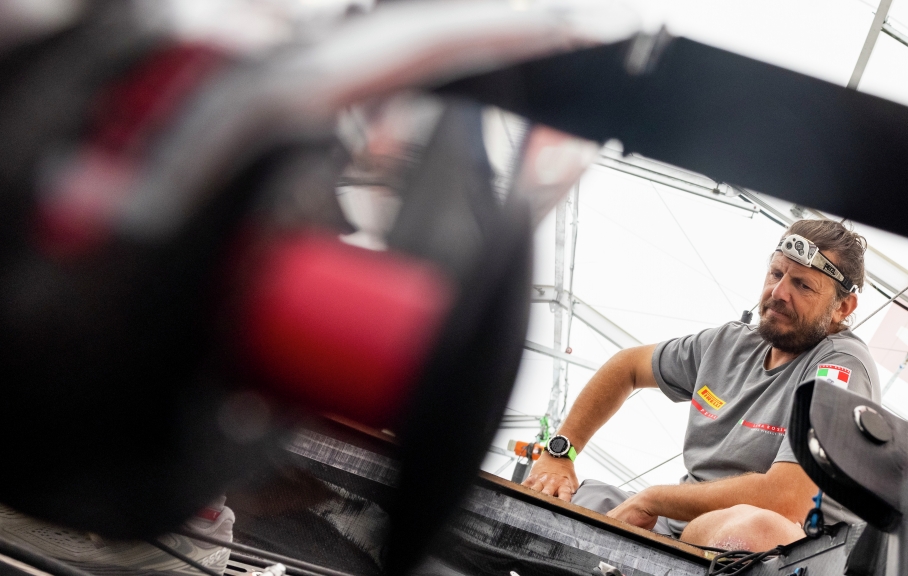
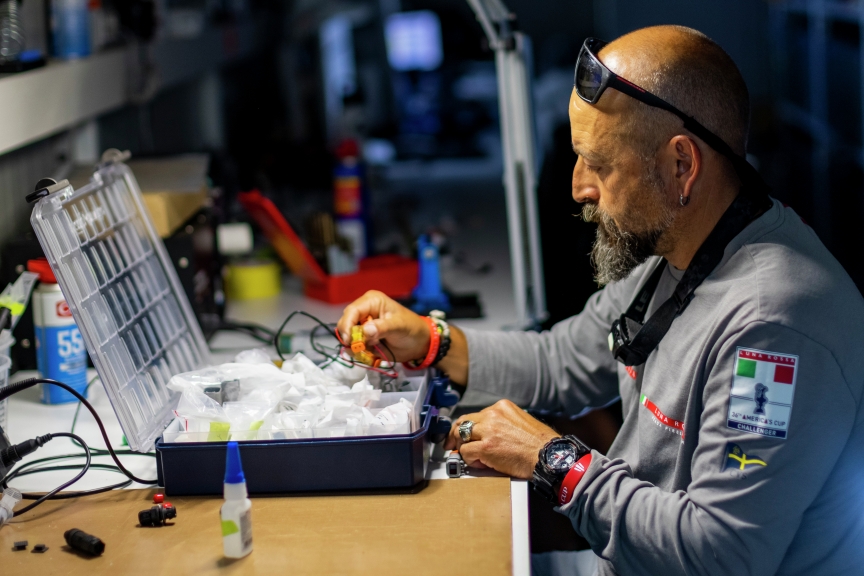
The largest of these groups is the mechatronics team, within which we find technicians specialized in hydraulics and electronics. They are responsible for the construction, management, and control of all the electronic and hydraulic systems on board.
Below the deck of an AC75 is a dense network of electrical circuits, pipes and valves that require meticulous maintenance. The control and management of the boat depends on the proper functioning of these systems.
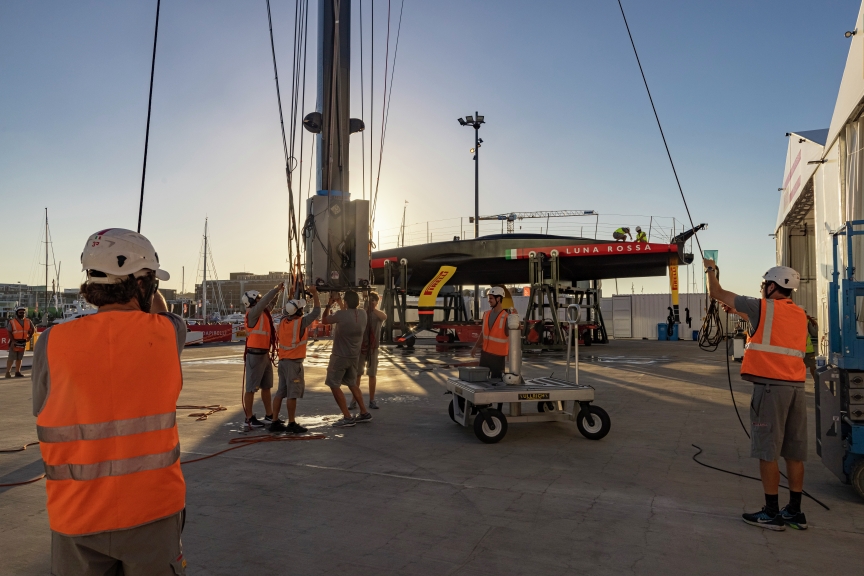
Another group in the shore team is responsible for the mast and all of the rigging components, that include the shrouds, halyards and cables. The riggers are also in charge of the mast stepping operations, as well as the activities related to rigging the boat when it goes out to sea. When the AC75 returns to the shore the group takes care of the dismasting operations before the boat returns to the shed. At the end of each regatta or training session on the water, all mast and equipment are scrupulously checked.
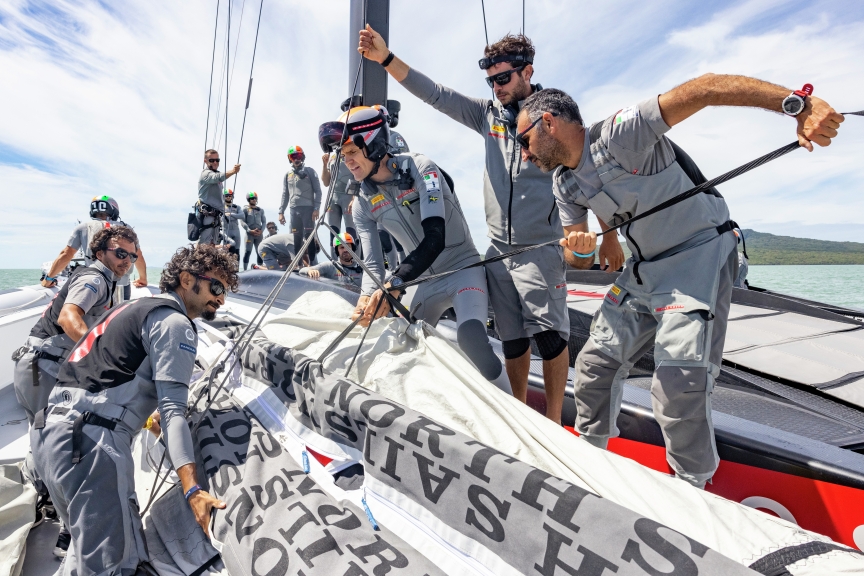
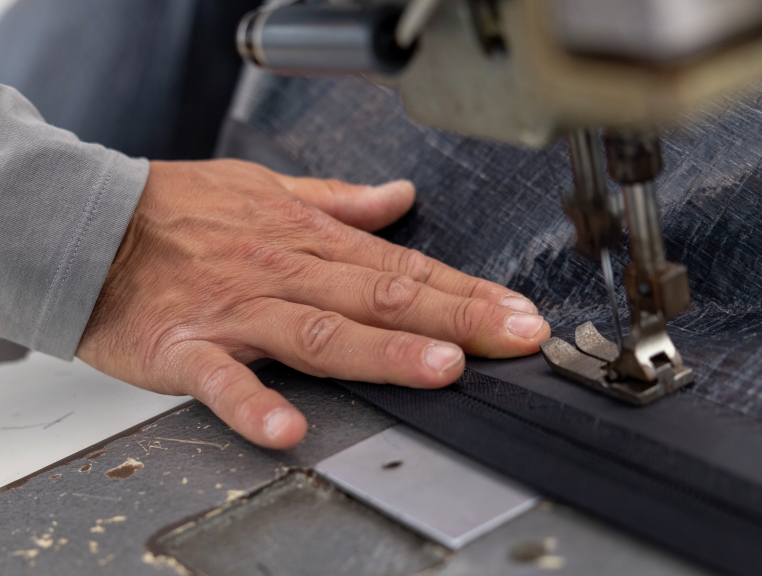
Inside the shed that houses the boats is the sail loft, an area dedicated to the sails. Here, a group of 4 sailmakers are at work with the assistance of the sailors. The sail-making team takes care of the finishing of the sails and carries out the modifications requested by sail designers and sailors. At the end of each training session on the water they check every seam and component of the mainsail and of the headsails used.
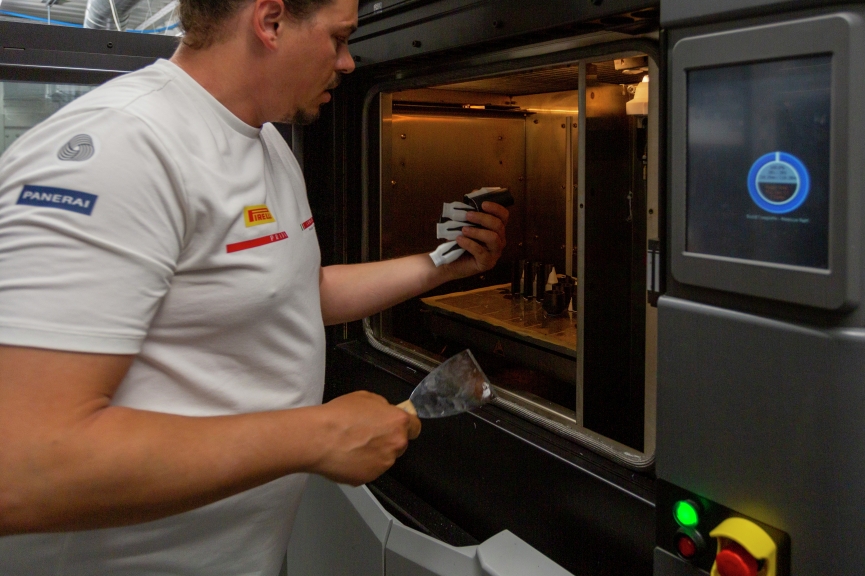
The Luna Rossa Prada Pirelli hulls and foil arms are built at the Persico Marine boatyard, whereas all the other components and appendages are produced “in-house” by specialized boat builders. Most of them have extensive experience in the America's Cup and in the most important international sailing circuits. The boat builders work closely with the designers and carry out the construction of parts such as the rudders, the boom and the deck, or hull cover, and a number of other parts. When the boat returns to the shed, the boatbuilders carry out careful checks, with the aid of highly sophisticated instruments capable of "photographing" the core of the structures and checking for any sagging and deformations. The bases in Cagliari and Auckland are equipped with top-level equipment and machinery, including a 3D printer, to create prototypes and custom parts.
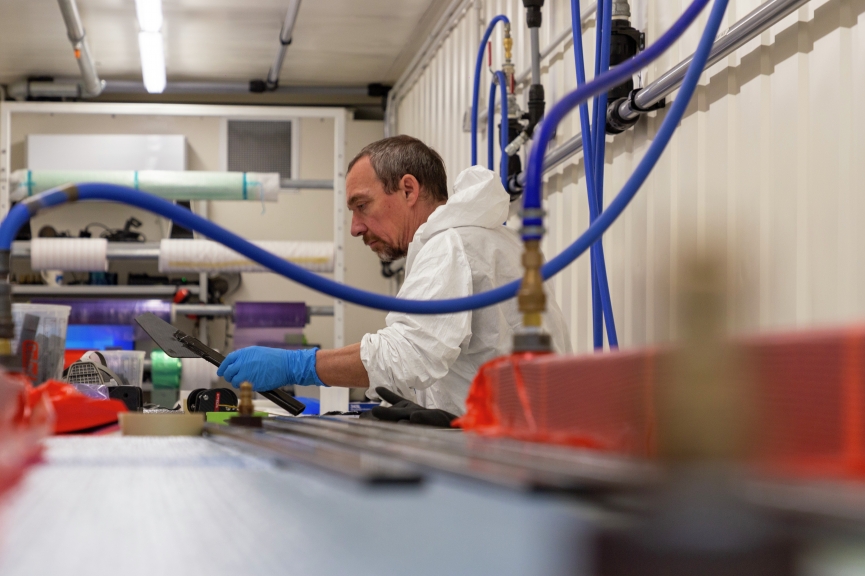
The hardware group oversees the maintenance of all deck equipment, including winches, blocks and pedestals, whereas the painters are involved in all the finishing work required for hull and appendages. They perform meticulous checks every evening to ensure that the surfaces of the hull, foil arm and rudder maintain a certain degree of roughness and, when necessary, are ready to paint, finish or sand.
The new generation sailors have also been at work in the shore department, each in a specific area. This integration has been an innovation that has improved the management of the boat as it allowed the sailors to acquire specific knowledge of the complex functioning of the boat and to intervene on the systems in case of emergency when sailing.
The days of the shore team are very long. In ordinary conditions they start working at 7.30 in the morning but, when the training program requires it, they will be at work already at 4.30.
The coordination of a group with this variety of tasks is not easy; each morning begins with a meeting to plan the work list and to ensure there are no overlaps between the various departments, so that everyone can work with the necessary coordination.
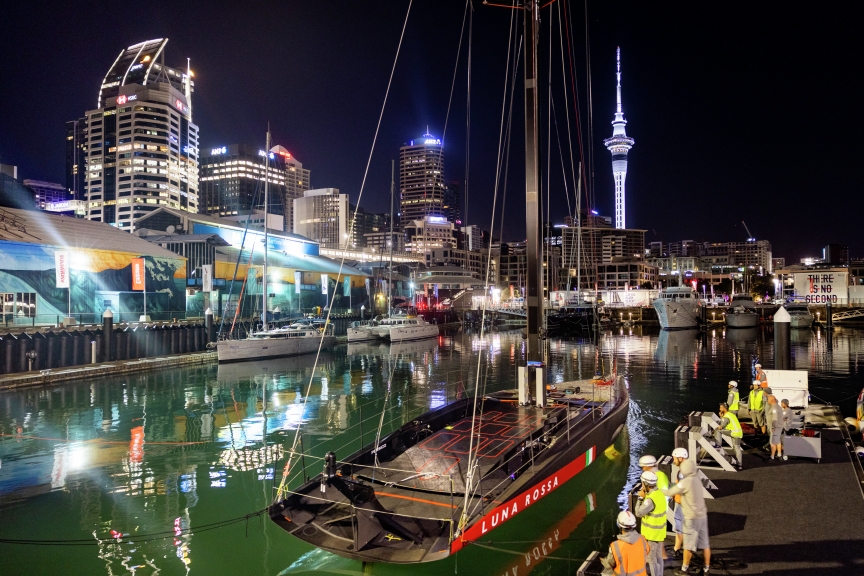
When the boat goes out to sea, the program changes and the work is planned to have the boat ready to go out on the water. In the sail loft the sails are battened and loaded onto the support boats while the mechatronics department checks all the systems; following this is the roll out, where the boat is taken out of the shed, the mast is stepped and the boat is lowered into the water. Before leaving the dock the shore team carries out a final "system check" with the sailors. Normally at least one member of each shore group assists the training and the races from the support boats: they will have to provide assistance and be ready for any need. Upon return, the boat is put back in the shed and the team carries out all the necessary checks, modifications and repairs required. Sometimes these can require a full night’s work.
Compared to previous editions, the organization of the shore team has changed. The AC75 requires very careful and meticulous management of electronic and hydraulic systems. These components are very delicate and, in contact with water, could suffer serious damage and compromise the management and performance of the boat. For this reason the mechatronics department is the most biggest.
The shore team, with this variety of activities, is a perfect example of efficient teamwork. In this area you will find a daily pattern of collaboration and exchange among technicians with highly specific skills and professionalism at work together towards one common goal.